· Sign AI
Why we started Sign AI
Who we are, what we are building, and why we are starting with film and TV.
- company
Where we’re starting
This is the first post on the Sign AI blog. We want to use it to explain, plainly, who we are, what we’re building, and why.
Sign AI is a Deaf-led company. We are building the tools to make the world’s information available in sign languages, and we are starting with film and TV.
Who we are
Sign AI was co-founded by Greg Rutty and Melissa “echo” Greenlee.
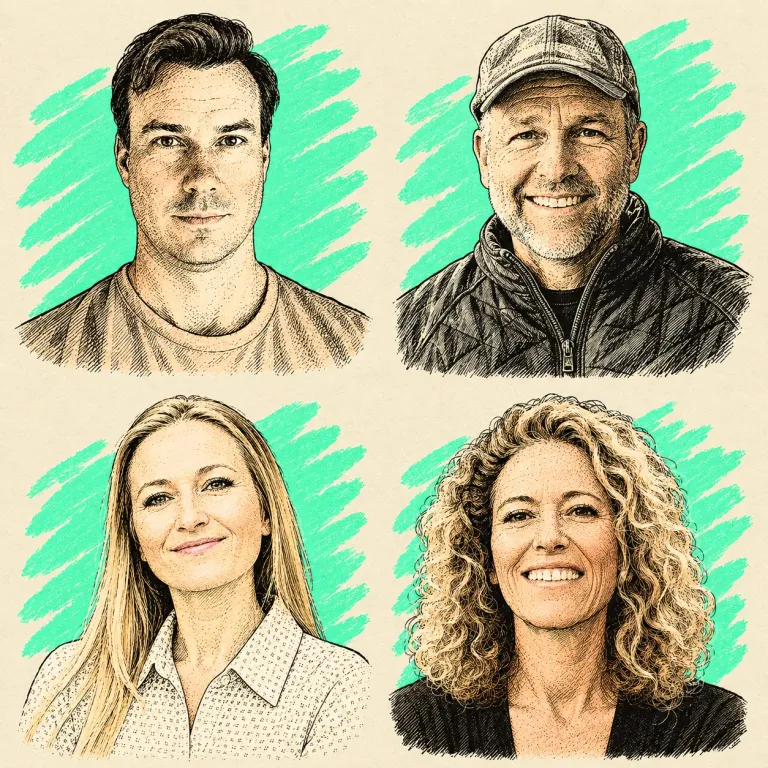
Greg lives with vision loss and has spent his career building technology products. echo is a Deaf entrepreneur who has spent hers advancing access for Deaf and hard of hearing people. Both of us have lived on the wrong side of a technology that was designed without us. That experience shapes how we work: the people who use what we build are in the room while we build it.
Our team is Deaf and hearing. It includes Certified Deaf Interpreters, Directors of Artistic Sign Language, Deaf actors, linguists, and engineers. The people who translate, perform, and review our work are native signers.
The problem, as we see it
Most of what the world produces is never available in a sign language.
Streaming made it routine to dub a series into thirty spoken languages. Sign language was left out, because producing it for every title, every character, and every episode did not scale. Where sign language exists on screen at all, it is usually one interpreter in a small window, signing for everyone.
That is not a translation of the work. It is a workaround. Deaf audiences deserve the same craft that any other language gets: casting, direction, and quality control.
Roughly 2 million people in the United States use American Sign Language as their primary language. Tens of millions of people around the world use a sign language as their first language. For all of them, most film, television, news, and education is still closed.
What we’re building
We are building a sign language dubbing studio, and the technology to make it scale.
Deaf translators adapt the script. Deaf actors perform every role under a Deaf director. AI renders those performances as avatars, so each character gets its own signer, and a title can be dubbed without filming a new set for every episode. The performance is human. The technology removes the parts that made sign language dubbing too slow and too expensive to do at all.
We are starting with film and TV because that is what our community is asking for. It is also where the gap is clearest, and where the craft matters most.
How we think about AI
We are not interested in AI that replaces people. We are interested in AI that extends what people can do.
Every part of our pipeline that carries meaning is led by a Deaf person. The AI does the rendering, not the translating. That is a deliberate choice, and it is also the only way to get the work right. A sign language dub that looks impressive but is not understood has failed.
We think this is how AI should be built in general: in service of human creativity, with the people it affects deciding how it is used. We would rather build slowly and get that right.
Where we’re going
Film and TV is the beginning. The tools we are building for dubbing are the same tools that can open news, education, public information, and everything else that is written or spoken and never signed.
We do not have all of it figured out. We are making it up as we go, and writing it down here as we do. This blog is where we will share what we learn: about the work, about Deaf culture and Deaf-led design, and about what AI is good for and what it is not.
Stay in touch
If you want to follow along, subscribe to our newsletter. If you work in film, TV, or localization and want to see what a sign language dub looks like, get in touch. If you are a Deaf actor, interpreter, or linguist who wants to work with us, we would like to hear from you.